Search This Blog

Tuesday, October 26, 2010

Gunfight at the O.K. Corral - October 26, 1881


Like many red-blooded American kids, Bud and I grew up going to Saturday afternoon matinees at the local theatre - ours was the American Theatre in Corning. One of our favorite genres was the western.
Bud was eleven and I was thirteen when Gunfight at the O.K. Corral came out in May, 1957. Burt Lancaster played Wyatt Earp and Kirk Douglas was Doc Holliday. A young Dennis Hopper played Billy Clanton. The setting was Tombstone, Arizona Territory. The Wyatt Brothers and Doc Holliday were portrayed as the "good guys". The Clantons, McLaury brothers and Billy Clairborne were the "bad guys".
There is much controversy over what really happened in Tombstone 129 years ago - who fired the first shot; whether the Clantons were really outlaws or just ranchers bullied into a fight by the Earps - but the outcome was clear; Frank and Tom McLaury and Billy Clanton were killed. Morgan and Virgil Earp and Doc Holliday were all wounded. Ike Clanton and Billy Claiborne ran away, unharmed.

In 1997, forty years after the movie made its impression upon us, Bud and I were enjoying an Arizona vacation. Our friends had given us a week at their condo in Tucson. Using that as our base, we made day trips throughout the area.
Top on the list to see was Tombstone.
After touring the museums, gift stores and historical buildings, we made our way to the O.K. Corral where Bud posed next to Doc Holliday - on the side of the "good guys".


While I crouched into fighting position on the opposite side with the Clantons and McLaurys.


Our trip concluded at Boot Hill, the resting place of Frank and Tom McLaury and Billy Clanton.

Another memory of mine from that day was the weather. It was sunny and in the low 70's - perfect for Iowans. In one of the gift shops a fire was burning in the fireplace. The owner was wearing a sweatshirt and said she was going to also put her coat on because she was freezing.

I guess it is all a matter of perception. We were comfortable. She was cold. The Earps and Doc Holliday were in the right; the Clantons, McLaurys, and Claiborne were in the wrong.

Monday, October 25, 2010

"The Proud Cherry Tree"


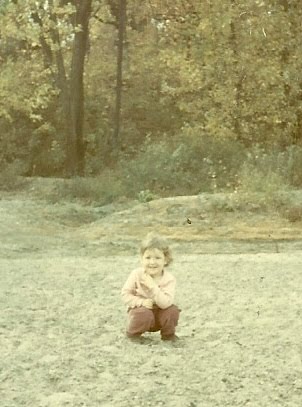
Every mom thinks her children are the cutest. Mine certainly were. I've always loved this picture of Kari taken on a Des Moines River sandbar in Jester Park. I had driven Doug's 'Ecology Club' members to the Park that day as a treat for all the trash pickup work they had done.


Sometimes when I am thinking about my granddaughter, Katrina, my niece, Kristi, or my daughter-in-law, Shalea, I wonder how they do all they do. They are working full time, raising children, taking care of homes, involved in their communities...then I remember that I once did the same things as well as furthering my formal education.

I began taking some college courses when Doug and I lived in Mt. Vernon. I continued taking some at DMACC when Kari and Preston were little. One of the classes was a Children's Literature course. One of the assignments in that class was to write a children's story. One of the stories I wrote was: "The Proud Cherry Tree".


It was a tale with a moral about a cherry tree which thought it was the best tree in the orchard. When a wind storm came along, the other trees told the proud cherry tree to bend with the wind. It would not. It was too proud. It would stand up to the wind. It would show them how brave it was. The wind blew and blew. The other trees kept shouting: "Bend with the wind." There was one final huge gust of wind. It toppled the proud cherry tree. The moral: learn to give a little when confronted with something you can't change.


We were to take turns reading our stories in class. I thought it would be clever to take my little girl with me, hold her on my lap and read my story to her. I dressed her in the cute dress and pinafore she'd had her three-year-old photo taken in and off we went to class.

Needless to say, it was a disaster. Kari wouldn't pay attention to the story. She didn't care about the proud cherry tree! She only cared about wriggling around and looking at everyone and everything else in that room and asking when we could leave.

Wasn't it W. C. Fields who said: "Never work with animals or children"?

Sunday, October 24, 2010

"The Moon Was A Ghostly Galleon Tossed Upon Cloudy Seas"

The picture I took of this month's full moon, The Hunter's Moon, illustrates one of my all time most loved poems: The Highwayman by Alfred Noyes. When I was in grade school, we had a recording of the poem. I don't remember who made the recording, but his voice was deep, dark, perfect for the rendition. I played the record every chance I got. I can still hear it today:


Alfred Noyes (1880-1958)
The Highwayman
PART ONE
I
THE wind was a torrent of darkness among the gusty trees, The moon was a ghostly galleon tossed upon cloudy seas, The road was a ribbon of moonlight over the purple moor, And the highwayman came riding— Riding—riding— The highwayman came riding, up to the old inn-door.
II
He'd a French cocked-hat on his forehead, a bunch of lace at his chin, A coat of the claret velvet, and breeches of brown doe-skin; They fitted with never a wrinkle: his boots were up to the thigh! And he rode with a jewelled twinkle, His pistol butts a-twinkle, His rapier hilt a-twinkle, under the jewelled sky.
III
Over the cobbles he clattered and clashed in the dark inn-yard, And he tapped with his whip on the shutters, but all was locked and barred; He whistled a tune to the window, and who should be waiting there But the landlord's black-eyed daughter, Bess, the landlord's daughter, Plaiting a dark red love-knot into her long black hair.
IV
And dark in the dark old inn-yard a stable-wicket creaked Where Tim the ostler listened; his face was white and peaked; His eyes were hollows of madness, his hair like mouldy hay, But he loved the landlord's daughter, The landlord's red-lipped daughter, Dumb as a dog he listened, and he heard the robber say—
V
"One kiss, my bonny sweetheart, I'm after a prize to-night, But I shall be back with the yellow gold before the morning light; Yet, if they press me sharply, and harry me through the day, Then look for me by moonlight, Watch for me by moonlight, I'll come to thee by moonlight, though hell should bar the way."
VI
He rose upright in the stirrups; he scarce could reach her hand, But she loosened her hair i' the casement! His face burnt like a brand As the black cascade of perfume came tumbling over his breast; And he kissed its waves in the moonlight, (Oh, sweet, black waves in the moonlight!) Then he tugged at his rein in the moonlight, and galloped away to the West.

PART TWO
I
He did not come in the dawning; he did not come at noon; And out o' the tawny sunset, before the rise o' the moon, When the road was a gypsy's ribbon, looping the purple moor, A red-coat troop came marching— Marching—marching— King George's men came matching, up to the old inn-door.
II
They said no word to the landlord, they drank his ale instead, But they gagged his daughter and bound her to the foot of her narrow bed; Two of them knelt at her casement, with muskets at their side! There was death at every window; And hell at one dark window; For Bess could see, through her casement, the road that he would ride.
III
They had tied her up to attention, with many a sniggering jest; They had bound a musket beside her, with the barrel beneath her breast! "Now, keep good watch!" and they kissed her. She heard the dead man say— Look for me by moonlight; Watch for me by moonlight; I'll come to thee by moonlight, though hell should bar the way!
IV
She twisted her hands behind her; but all the knots held good! She writhed her hands till her fingers were wet with sweat or blood! They stretched and strained in the darkness, and the hours crawled by like years, Till, now, on the stroke of midnight, Cold, on the stroke of midnight, The tip of one finger touched it! The trigger at least was hers!
V
The tip of one finger touched it; she strove no more for the rest! Up, she stood up to attention, with the barrel beneath her breast, She would not risk their hearing; she would not strive again; For the road lay bare in the moonlight; Blank and bare in the moonlight; And the blood of her veins in the moonlight throbbed to her love's refrain .
VI
Tlot-tlot; tlot-tlot! Had they heard it? The horse-hoofs ringing clear; Tlot-tlot, tlot-tlot, in the distance? Were they deaf that they did not hear? Down the ribbon of moonlight, over the brow of the hill, The highwayman came riding, Riding, riding! The red-coats looked to their priming! She stood up, straight and still!
VII
Tlot-tlot, in the frosty silence! Tlot-tlot, in the echoing night! Nearer he came and nearer! Her face was like a light! Her eyes grew wide for a moment; she drew one last deep breath, Then her finger moved in the moonlight, Her musket shattered the moonlight, Shattered her breast in the moonlight and warned him—with her death.
VIII
He turned; he spurred to the West; he did not know who stood Bowed, with her head o'er the musket, drenched with her own red blood! Not till the dawn he heard it, his face grew grey to hear How Bess, the landlord's daughter, The landlord's black-eyed daughter, Had watched for her love in the moonlight, and died in the darkness there.
IX
Back, he spurred like a madman, shrieking a curse to the sky, With the white road smoking behind him and his rapier brandished high! Blood-red were his spurs i' the golden noon; wine-red was his velvet coat, When they shot him down on the highway, Down like a dog on the highway, And he lay in his blood on the highway, with the bunch of lace at his throat.
* * * * * *
X
And still of a winter's night, they say, when the wind is in the trees, When the moon is a ghostly galleon tossed upon cloudy seas, When the road is a ribbon of moonlight over the purple moor, A highwayman comes riding— Riding—riding— A highwayman comes riding, up to the old inn-door.
XI
Over the cobbles he clatters and clangs in the dark inn-yard; He taps with his whip on the shutters, but all is locked and barred; He whistles a tune to the window, and who should be waiting there But the landlord's black-eyed daughter, Bess, the landlord's daughter, Plaiting a dark red love-knot into her long black hair.

The above poem can be found in print, for example, in:
Noyes, Alfred. Collected Poems. New York: Frederick A.Stokes Company, 1913.
A recording of the poem being sung can be found on:
McKennitt, Loreena. The Book of Secrets [CD]. Burbank, CA:Warner Bros. Records Inc., 1997.

The poem is romantic and tragic at the same time - something that would stick in the mind of an impressionable young girl for a lifetime. I'm a big fan of Loreena McKennitt, also. I do have her recording of The Highwayman and while I find it lovely, it will never replace the recording I first heard in the 1950s - the one I still hear in my mind today......

........Tlot, tlot in the frosty silence! Tlot, tlot in the echoing night!.......

Saturday, October 23, 2010

Happy Birthday To Our Sandwich Cousin

Betty, Janet and Ramona on our horse, Queenie. - 1952-53?

I've commented before about how close we were to our first cousins. My sister, Betty, cousin Janet and I were the three musketeers. If we were a sandwich, Betty and I were the bread and Jan was the filling. Her birthday, October 23, was exactly one month after Betty's, September 23, and almost four weeks before mine, November 18. She was also in the middle of our birth years - mine, 1943, hers, 1944, and Betty's, 1945.
Our neighbor, Albert ('Shorty') Reichardt, took this picture of us one summer after we rode old Queenie down to his place. How did that poor old horse carry us all?

Oh, did we have some good times growing up! Obviously we were playing dress-up on this occasion. Standing on the west side of our house, left to right, me (in the coveted black hat), Lila, and Glenna (with her broken arm). Sitting - Janet, the gypsy, baby Mary Lou and Betty, the cowgirl. We all wanted to wear hats, but Mom wasn't a hat person. I think we took turns having our picture taken wearing her fancy black chapeau. I know Glenna remembers this day because she asked me not long ago where my Mom got the hat.

This professional photo of the Roberts cousins was taken in 1949 or '50. Left to right, Larry Joe, Lila May, Glenna Lee, Janet Kay, Glen Edward and Mary Lou squeezed in front. I remember Mom taking care of Mary Lou one time when she was little. After Aunt Evelyn picked her up and left, Mom proclaimed she was a little spoiled brat.


This photo of the family was taken at our place in 1957 when we hosted the Ridnour Cousins Reunion. Left to right: Glen, Janet, Uncle Howard, Lila, Glenna, Larry, Mary Lou, and Aunt Evelyn.
I know from reading the diaries I kept from 1957 to 196o, that Jan stayed with Betty and me fairly often. She would ride the school bus home with us and spend the night. And Janet is the cousin I wrote about going to Illinois with me and Grandpa and Grandma in 'The Illinois Connection'.
Once we graduated from high school, we went our separate ways. Janet met her husband, Bob Gray, while working in Red Oak. He was a career Navy man so they traveled around some before settling in Des Moines. Their firstborn, William, was a little younger than Preston. I remember keeping him for a day when he was a baby so Jan and Bob could attend the State Fair. They also had a daughter, Lana.
Many years later, I became better acquainted with Bill when he and I both worked as Building Facilitators for the West Des Moines School District. With Lana, too, when she worked as a teller where I banked.
Janet is retired now. She became a widow when Bob died in 2006. We still don't see each other very often, but when we do, she's the same old fun loving girl I knew from our youth.
Happy 66th birthday, Jan!


Friday, October 22, 2010

George Washington Gravett - October 22, 1842

One of my sixteen great-great grandparents, George Washington Gravett, was born 168 years ago today. He is pictured above with his wife, Melinda Jane Cecil and ten of their fifteen children.
(Five died in infancy.) Great-great grandpa and grandma are seated directly behind their youngest son, Joe Gravett. The woman in the back on the left is my Great grandmother, Nancy Gravett Lynam. There is no date on the picture, but I would guess it was taken in the early 1900's.
I don't know too much about my Gravett relatives. When I was working at the light plant (Corning Municipal Utilities) in 1966-67, Joe was (to me) an old man who came in to pay his light bill. He told me we were related. But at that time in my life I wasn't interested in family genealogy. Too bad because I'm sure he could have told me many stories.
The woman seated to the left of G.W. was Jeannette Hunt. I didn't know her, but I knew her son, Paul Hunt and his wife, Bernadette. When I moved back to Corning in '78, Bernadette was the manager of Westgate Housing. She is the one who gave me this picture. Paul had died. They had no children. When she gave the picture to me she said, "You are probably the one who will appreciate it the most."
The woman on the right in the back was Lulu Fail. She was the mother of Ruth Wyatt. Mrs. Wyatt was the high school librarian. When I was a senior, I worked in the library. Again, I was told we were related. Again, I did not pay attention.
When Bernadette gave me the photo, she named all of the women and three of the men. She said according to family legend one of the boys had "taken off out west" never to be heard from again. Bud and I kidded that we figured it was the one behind Joe and between G.W. and Melinda. We both thought he looked a likely 'outlaw'.
At least three of the children who died in infancy are buried in Findley Cemetery northeast of Villisca. I remember seeing the gravestones and that one of them, a daughter had the same birth day, November 18, as I.
My grandparents, George and Bessie Lynam, were attendants at Joe's wedding in 1915 when he married Ezma Dicks. I learned that from reading old issues of the Adams County Free Press online. Also that one of Joe's sons, Cecil Rex Gravett, was killed in WWII.
If I learn more about this family, I'll come back and add to this blog. And yes, I really wish I had paid attention when Joe Gravett and Ruth Wyatt tried to tell me some family history.

Wednesday, October 20, 2010

Grandpa Joe and Fred Fitch

Of all the pictures I have of Mom's and Grandma's, I cannot find one of Mom and her father together except for the posed studio photos - no snapshots of just the two of them. Here is Grandma Delphia and Grandpa Joe Ridnour. Written on the back in Mom's handwriting, "Daddy and Mother, 1954." Mom always referred to her father as "Daddy" even when she was in her 80's and was remembering something about him. Never Dad or Father, it was always, "Daddy".
I wanted a picture of Mom from the same era. This one was taken in October, 1957 when we hosted the Ridnour Cousins reunion at our place. Ron and Louis in back; Betty, Ramona and Ruth in the middle; Leslie in front. (Uncle Alvin in his pickup window.) (Note those rolled up jeans, bobby sox and saddle shoes!)

So, who is Fred Fitch and what does he have to do with this blog? One of the things I remember from my youth was a weekly visit down to Grandpa and Grandma's house west of Iveyville. We often were at their place for Sunday dinners, birthday celebrations, etc., but this trip had a specific purpose: for my Mom to "do" Grandpa's hair. At the time, I thought it must be something special that only Grandpa's middle daughter knew how to do. Now I realize that it was a gift of love and care that my Mom gave to her Daddy.
First she would wrap a towel around Grandpa's shoulders. Then he would lean over the kitchen sink where she would wash his hair with Fitch's Shampoo; lathering and rinsing it a couple of times. Then she pulled the towel up over his head to blot most of the water.


Grandpa would then shuffle over to one of the black and white chrome kitchen chairs and sit down. (By then the arthritis in his knees was so bad he didn't walk any distance without a cane.) Mom toweled his hair some more before combing it. Next she poured some Fitch's Hair Tonic in her hands, rubbed it around then worked it through Grandpa's hair; finally parting and combing it the way he always wore it. The entire process would have taken less than a half hour, but in my memory, it seemed to take longer - a big, significant production instead of a small token of caring.
Oh, and those bottles - their shape and size and the colors of the shampoo and tonic! They only added to the mystique of the entire ritual. Fred W. Fitch was an early Iowa barber in Madrid. Later he had a barbershop in Boone where he founded the F. W. Fitch Co. in 1892. He began marketing his hair products to and through barbershops throughout Iowa. In 1917 he moved his company to Des Moines where he built a four story plant at Fifteenth and Walnut. (Today the Fitch Building is home to local artists and a gallery.)
Fitch was the first Iowa manufacturer to sponsor a national radio program. One of the slogans for his shampoo was: "Don't itch it; Fitch it." From 1938 until 1948, the "Fitch Bandwagon" was broadcast for a half hour every Sunday night on NBC. It was unusual because each program was broadcast from the city in which the featured band was playing. It might have been Cab Calloway from New York one week or Tommy Dorsey from Chicago or Guy Lombardo from Los Angeles the following Sunday night.
Fred W. Fitch's story was one of "rags to riches". He became a millionaire with his hair products and savvy salesmanship. He helped found the Des Moines College of Pharmacy and later gave $100,000 to Drake University for the construction of the Fitch Hall of Pharmacy.
Naturally I knew nothing about Fred Fitch when I accompanied Mom on those weekly visits so long ago; nor would I have cared if I had known. The lesson I learned by example was that performing a simple task for someone else could be a memorable act of love.


Tuesday, October 19, 2010

"The World's Fastest Indian"

When American Pickers debuted on the History Channel last January, I was an instant fan. I've long been a dumpster diver and discoverer of "treasures" set out for trash pickup during clean up week as well as an inveterate devotee of auctions. Watching a show about other people hunting for good junk was interesting. And the fact that these American Pickers were from Iowa made it even better. The interaction between stars Mike Wolfe and Frank Fritz adds to the watch ability.
What was new to me was the term pickers. I had never heard that name applied to junk collectors before. The polite term was antique hunters; impolite - dumpster divers. After watching the show a few times I began to notice the two were very interested in old motorcycles - Frank in Honda's; Mike in Indians. I don't know a lot about motorcycles, but I had heard of Indians. I knew they had their own fans just as the more famous Harley's do.

Which is what made me think a movie about Indian motorcycles might be interesting. "The World's Fastest Indian" was the movie my bank's travel club was showing this month. Its reviews were good and it was based on a true story, so this morning we went to watch it.
The movie tells the tale of New Zealander, Burt Munro. His lifelong ambition was to try to break the land speed record at the Bonneville Salt Flats in Utah on his modified 1920 Indian Scout motorcycle, which he did in 1967 at the age of 68. Anthony Hopkins was the perfect actor to portray Munro.
This is a picture of a 1920 Indian Scout. I don't see how anyone in their 60's could ride one very long in such a position. This was such a wonderful 'feel good' movie for people our age. It makes you think that you're never too old.